
Decode Your Athletic DNA
Explore 85 genetic characteristics across eight dimensions of athletic intelligence.


Genomic Intelligence. Phenotypic Insights. Performance Evolution.
Discover a connected athlete development experience bringing together genomic insights, sport-specific intelligence, measurable performance and longitudinal progress.

Research connections link genetic traits to the demands of sports, roles and events. They are not 675 separate traits or predictions about an individual athlete.
Explore 85 genetic characteristics across eight dimensions of athletic intelligence.
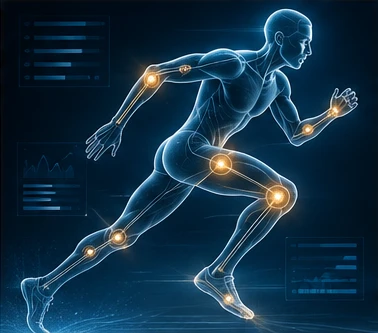
Connect your genetic profile with research into the physical and physiological demands of your sport, role or event.

Bring individual characteristics, sporting demands and performance priorities into a structured development journey.

Establish baselines, review progress and understand how performance changes through training and development.
A fast bowler, a goalkeeper, a sprinter and a swimmer face different physical and physiological demands. SportsGeneX connects athletic intelligence with the demands of your chosen sport.

Explore the demands of batting, fast and spin bowling, fielding, wicketkeeping and all-round performance, with role-specific Athlete Development Protocols.
Roles and events
Batting · Fast bowling · Spin bowling · Wicketkeeping · Fielding · All-rounders
Physical and physiological demands
How SportsGeneX connects it
Your genomic intelligence is a consistent reference point. Phenotypic measurements show what you actually do. Longitudinal development follows those measurements over time. See how this works in each sport.

Explore stroke-specific demands, speed, endurance and event distances—from sprint events to longer races.
Roles and events
Four strokes · Individual medley · 50 m to 1,500 m
Physical and physiological demands
How SportsGeneX connects it
Your genomic intelligence is a consistent reference point. Phenotypic measurements show what you actually do. Longitudinal development follows those measurements over time. See how this works in each sport.

Understand the physical and positional demands of the game, including acceleration, repeated effort, movement and endurance.
Roles and events
Goalkeeper · Defender · Full-back / wing-back · Midfielder · Winger · Forward
Physical and physiological demands
How SportsGeneX connects it
Your genomic intelligence is a consistent reference point. Phenotypic measurements show what you actually do. Longitudinal development follows those measurements over time. See how this works in each sport.
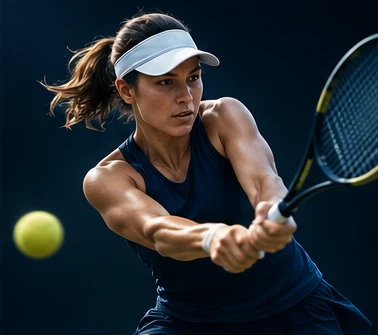
Explore the demands of serving, court movement, repeated explosive effort and match endurance.
Roles and events
Singles · Doubles · Serve and return · Baseline · Net play
Physical and physiological demands
How SportsGeneX connects it
Your genomic intelligence is a consistent reference point. Phenotypic measurements show what you actually do. Longitudinal development follows those measurements over time. See how this works in each sport.

Understand agility, rapid changes of direction, court coverage and repeated high-intensity movement.
Roles and events
Singles · Doubles · Mixed doubles · Footwork
Physical and physiological demands
How SportsGeneX connects it
Your genomic intelligence is a consistent reference point. Phenotypic measurements show what you actually do. Longitudinal development follows those measurements over time. See how this works in each sport.

Explore jumping, acceleration, repeated effort, court movement and positional demands.
Roles and events
Guard · Wing · Forward · Centre
Physical and physiological demands
How SportsGeneX connects it
Your genomic intelligence is a consistent reference point. Phenotypic measurements show what you actually do. Longitudinal development follows those measurements over time. See how this works in each sport.
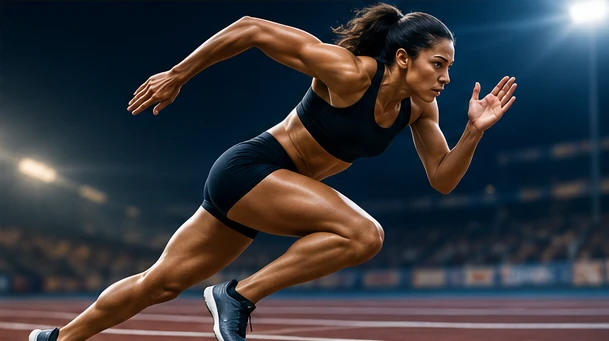
From 100-metre sprints to middle-distance, distance running, half-marathon and marathon, explore the different physical demands of your chosen event.
Roles and events
Sprints · Middle distance · Distance · Road running · Hurdles · Relays · Jumps · Throws · Combined events
Physical and physiological demands
How SportsGeneX connects it
Your genomic intelligence is a consistent reference point. Phenotypic measurements show what you actually do. Longitudinal development follows those measurements over time. See how this works in each sport.
SportsGeneX combines a common genetic profile with information about the demands of different sports. Specific genetic-to-sport interpretations are used only where the relevant scientific mappings have been approved. Sporting context and observed performance remain distinct from genetic results.
Sport-specific genetic mapping is approved only for cricket fast bowling and swimming. In the other sports, your full genetic profile sits beside sport-demand exploration and guided development, without sport-specific genetic interpretation.
Athlete Development Protocols are structured guidance for a sport or role, to review with your coach. Not all of them are personalised using genetic information, and they are not scientifically validated genetic interventions.
85 research-informed genetic traits. Eight areas of insight. A more individual perspective on athletic development.
Physical capacity & motor skills
6 genetic traits
Movement is fundamental to almost every sport. Agility, physical coordination, grip strength and related characteristics influence the demands athletes face across different disciplines.
Example traits
Why it matters
From changing direction on a football field to controlling movement in tennis or developing technical consistency in cricket, understanding the physical qualities relevant to your sport provides useful context for athlete development.
How this knowledge can help
Explore movement-related genetic research alongside actual performance assessments. Coaches can use relevant agility, movement and strength measurements to identify development priorities and follow progress over time.
See Athlete Genomic IntelligenceStrength, power & training response
10 genetic traits
Strength and power influence many sporting movements—from sprint acceleration and jumping to throwing, striking and repeated explosive efforts.
Example traits
Why it matters
Different sports place different demands on muscular strength, explosive power and repeated physical effort. Understanding these demands helps athletes and coaches choose appropriate ways to assess development.
How this knowledge can help
Explore research-informed genetic characteristics related to strength and power, then use actual performance measurements to discuss training priorities, monitor development and evaluate progress.
See Athlete Genomic IntelligenceEndurance & energy metabolism
4 genetic traits
Endurance involves the body's ability to sustain effort, manage energy demands and respond to prolonged physical activity.
Example traits
Why it matters
Whether an athlete competes in distance running, swimming, football or other endurance-demanding activities, pacing, aerobic fitness and sustained effort are important parts of the sporting picture.
How this knowledge can help
Explore genetic research associated with endurance-related characteristics while tracking relevant performance measurements such as distance, time, pace and exercise responses.
See Athlete Genomic IntelligenceRecovery, sleep & adaptation
8 genetic traits
Training is only one part of athletic development. Sleep, recovery and adaptation-related processes are also important to maintaining consistent participation and managing training demands.
Example traits
Why it matters
Understanding recovery-related characteristics encourages athletes to consider the broader routines that support their development, rather than focusing only on training sessions.
How this knowledge can help
Explore genetic research related to sleep and recovery while monitoring sleep consistency, perceived readiness, training observations and relevant recovery measurements.
See Athlete Genomic IntelligenceBone, joint & connective tissue
11 genetic traits
Bones, joints, tendons and connective tissues support movement and withstand the physical demands of training and sport.
Example traits
Why it matters
Different sporting activities place different mechanical demands on the body. Understanding these demands is relevant to physical preparation, movement technique and long-term participation.
How this knowledge can help
Explore research related to bone and connective-tissue characteristics alongside appropriate strength, movement and training-load assessments conducted by qualified professionals.
See Athlete Genomic IntelligenceNutrition, digestion & hydration
22 genetic traits
Nutrition supports the many demands of an active body. Nutrient metabolism, digestion-related characteristics and individual dietary factors are important considerations in athletic development.
Example traits
Why it matters
Different athletes have different dietary habits, nutritional requirements and training demands. Understanding nutrition-related characteristics can contribute to more informed discussions about everyday nutrition.
How this knowledge can help
Explore research-informed genetic associations involving nutrients and metabolism. Use this information as additional context when discussing diet, relevant health assessments and nutritional planning with qualified professionals.
See Athlete Genomic IntelligenceCardiovascular & respiratory
13 genetic traits
The cardiovascular and respiratory systems help support physical activity by circulating blood, delivering oxygen and responding to the demands of exercise.
Example traits
Why it matters
These systems are relevant across sports—from endurance events to repeated high-intensity activity—and are important considerations in physical fitness and athletic development.
How this knowledge can help
Explore research-informed genetic characteristics involving cardiovascular and respiratory function alongside actual fitness measurements and appropriate professional assessments.
See Athlete Genomic IntelligenceCognitive & behavioural performance
11 genetic traits
Sport also involves concentration, motivation, decision-making and responses to demanding situations. These characteristics form an important part of the broader athlete-development picture.
Example traits
Why it matters
From maintaining concentration during competition to managing pressure and staying engaged with training, psychological and behavioural skills can influence the sporting experience.
How this knowledge can help
Explore research involving selected behavioural and stress-related characteristics, while using coach observations, athlete reflection and appropriate performance assessments to discuss development.
See Athlete Genomic IntelligenceEach result describes a predisposition reported in research. It is not a measure of ability.
SportsGeneX is an ongoing athlete development experience, not a one-time PDF report.
Begin with 85 genetic characteristics across eight dimensions.
See what your sport, role or event demands.
Turn priorities into a structured plan to review with your coach.
Record baselines you can repeat like for like.
Revisit progress through the year and adjust the plan with your coach.
Your genetic profile provides a consistent reference point, while your measured performance can change over time. Tracking those changes helps you understand your development, but does not by itself establish a genetic cause.
The platform
Five connected components, each built on clearly separated kinds of information.
Illustrative Demo — Screens show synthetic athletes and example data.
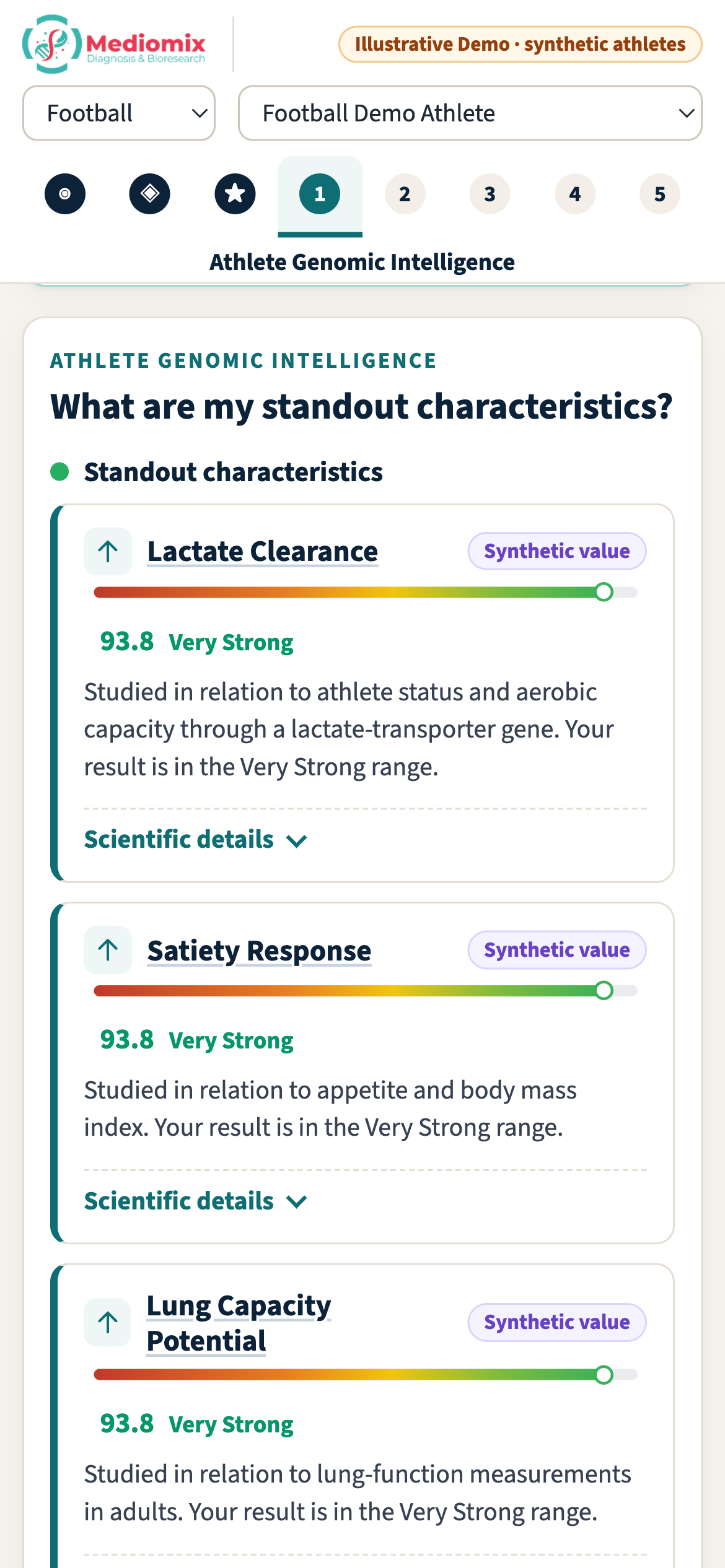
Explore 85 research-informed genetic traits across eight areas relevant to understanding individual characteristics and athletic development.
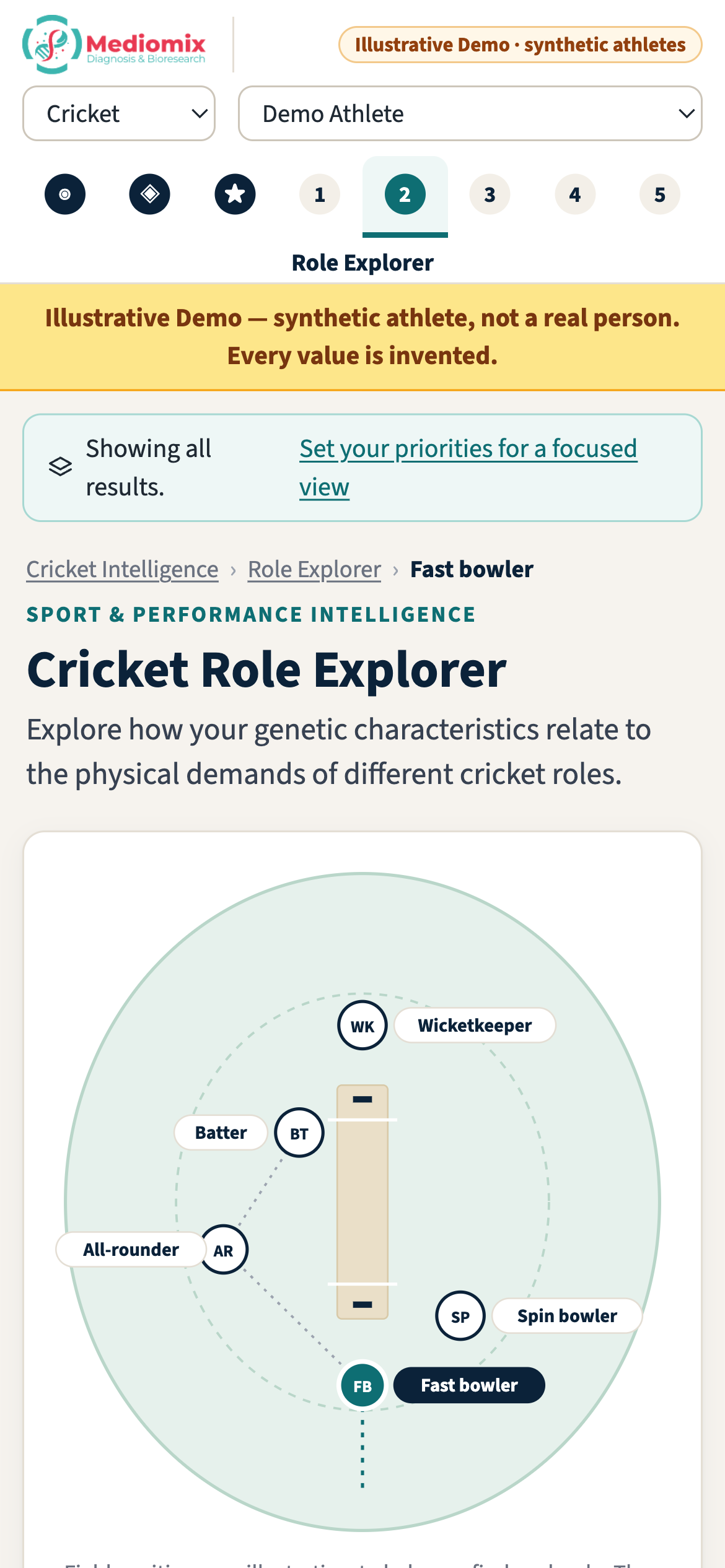
Explore the physical, physiological and performance demands of seven sports, including different roles, disciplines and events.
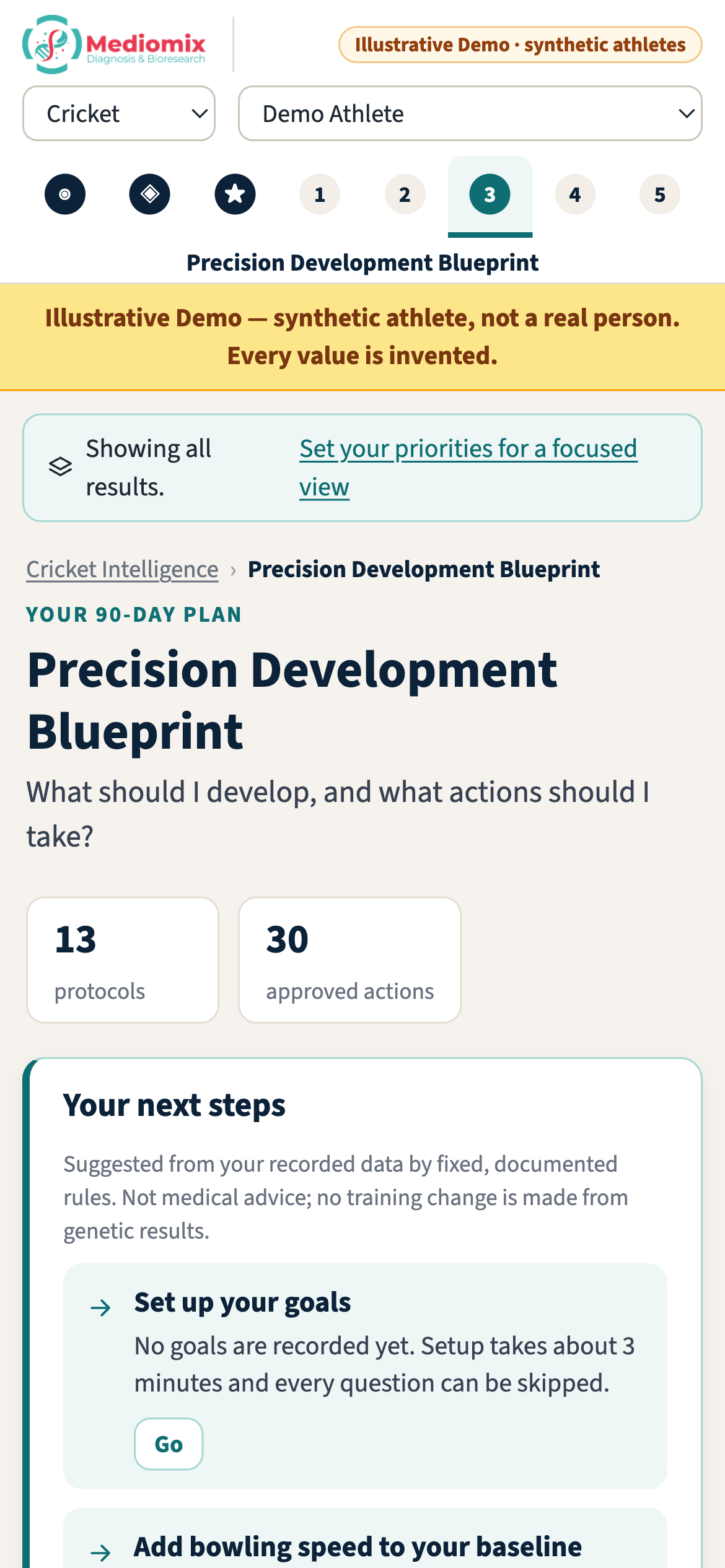
Bring together sporting context, development priorities and relevant athlete information in a structured framework for individual development.
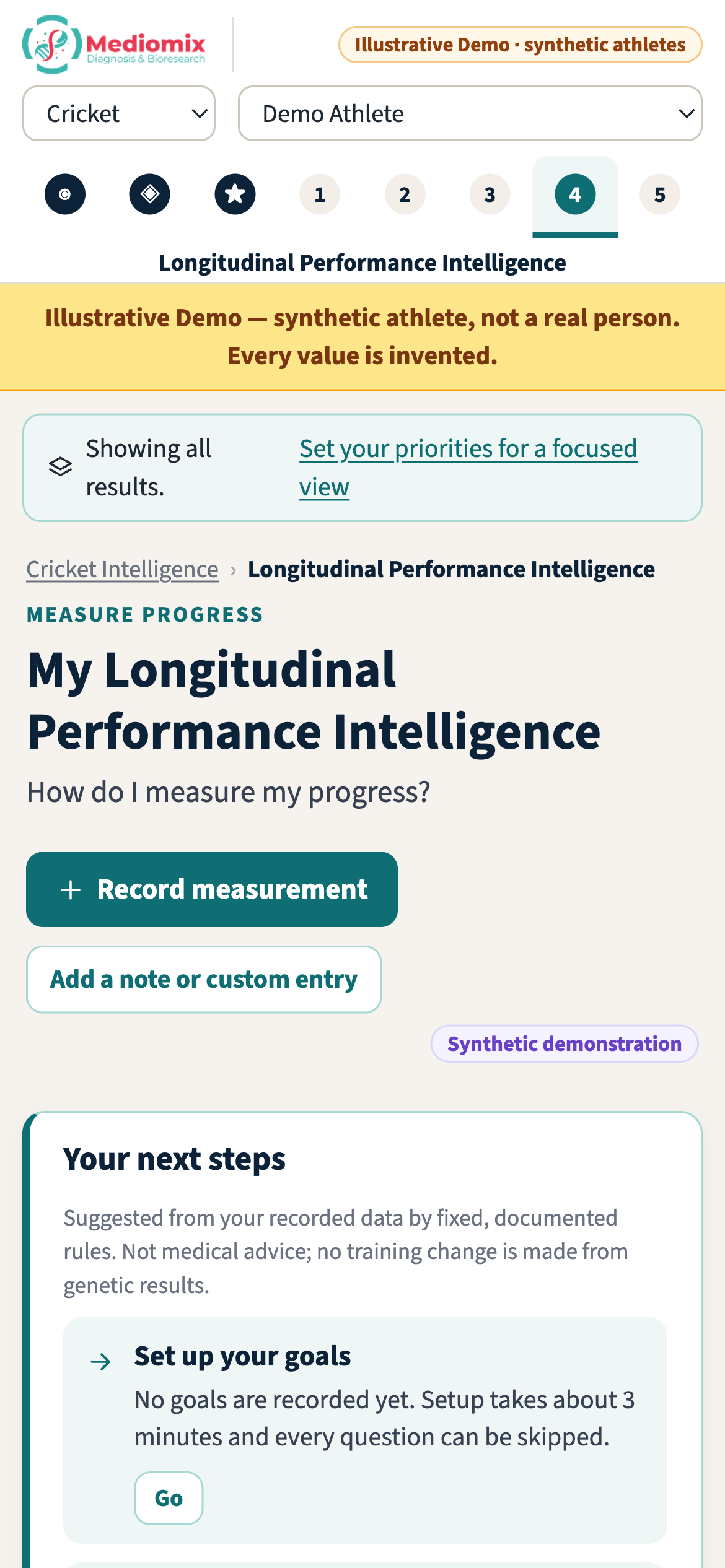
Establish performance baselines, revisit measurements and follow changes over time through structured observation and review.
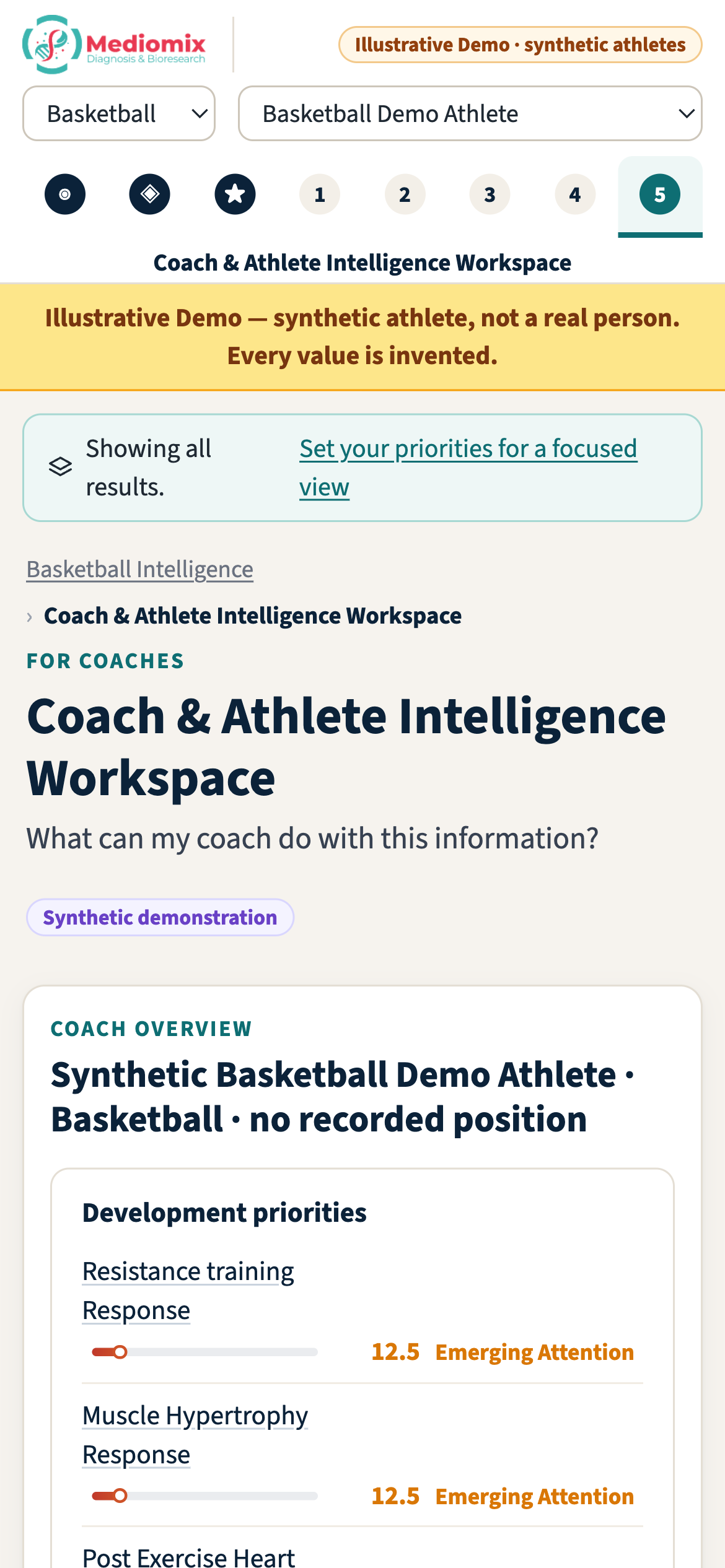
Connect athlete information, coaching observations and development reviews within a consistent framework.
SportsGeneX Illustrative Demo screens shown with synthetic demonstration athletes — not real people. See What you receive for current availability.
Have questions about how SportsGeneX fits your development plans?
Who is SportsGeneX for?
Athletes
See your 85 genetic traits explained in plain language, explore what your sport's roles, styles or events typically demand, and record baselines you can re-test like-for-like through the year.
Your genetic results don't decide what you can achieve. Effort, coaching, training, recovery and opportunity matter enormously.
Parents
A plain-language explanation of your child's genetic characteristics, and a structured way to discuss development with coaches, grounded in measured progress.
SportsGeneX does not identify talent, choose a sport or predict your child's future in sport. For athletes under 18, a parent's or guardian's consent is required; the details are confirmed when you enquire.
Coaches
See each athlete's plan, baselines and follow-ups in one view, and record structured observations so feedback stays consistent. Genetic context is background for discussion, never a substitute for what you observe and measure.
Coach observations are professional judgement, not validated assessments. Coach access needs the athlete's consent, and arrangements are confirmed when you enquire.
Sports academies
One consistent structure for baselines, plans and reviews across your athletes, with sport-demand exploration across all seven sports and a Day 30 · 60 · 90 review rhythm over 12 months.
Academy and multi-athlete arrangements, pricing and onboarding are discussed on enquiry. SportsGeneX is not a selection tool.
Seven sports: Cricket · Swimming · Football · Tennis · Badminton · Basketball · Athletics.
months of platform access
Your genetic profile is a starting point—not the end of the experience.
SportsGeneX is designed to bring your genetic insights, sporting context, development information and progress into one place.
Return to your profile. Explore your sporting demands. Organise priorities. Record measurements. Revisit progress. Keep the conversation moving throughout the year.
Ask us about current pricing and availability.
What you receive
These are being brought into the customer platform. When you enquire, we'll confirm which are available to you and when.
A separate laboratory test, not part of SportsGeneX sequencing. Pending clinical and technical approval, and not yet available.
The future of athlete development is increasingly data-informed.
Across elite sport, athlete development increasingly combines physical testing, performance analytics, movement data, recovery monitoring and coaching expertise.
From Australia's national sporting programmes to Britain's high-performance institutes, from international football to professional basketball, American football and ice hockey, advanced measurement and analysis have become important parts of modern sports performance.
SportsGeneX brings another dimension to this approach: research-informed genomic intelligence.
By combining genetic characteristics, sporting context, development information and progress tracking, SportsGeneX is designed to make a broader athlete-development experience accessible to aspiring athletes, families, coaches and academies.
Guidance on individual athlete profiling, physiological assessment, and testing and monitoring.
SourceTechnology, engineering and research in science and medicine supporting Olympic and Paralympic sports.
SourceNational team players are tested regularly to assess endurance, power and strength.
SourcePlayer and ball optical tracking announced for all NBA G League venues.
SourcePlayer location, speed, distance and acceleration data captured through Next Gen Stats.
SourceSkating speed, skating distance, shot speed and shot location metrics through NHL EDGE.
SourceThese independent examples illustrate advanced sports performance analytics; they are not endorsements or validations of SportsGeneX.
Genetic research provides information about biological characteristics associated with particular variants.
SportsGeneX brings this information into a broader athlete-development framework, alongside sport-specific demands, observed performance and longitudinal measurements.
Where supported by approved scientific evidence, genotype–phenotype correlations provide additional context for understanding individual characteristics.
The result is a more structured way to explore the relationship between genomic information and the athlete's real-world development.
Genotype–Phenotype Research Insights: Explore research-supported relationships between genetic variation and biological characteristics, alongside observed athletic performance and development information.
See how genetic and sporting information is used in each sport.
A DNA test usually ends with a report. SportsGeneX is designed as a 12-month experience that places your genetic profile beside the demands of your sport, a structured development plan and your own measured progress.
You explore 85 genetic characteristics across eight dimensions, from movement and power to recovery, nutrition and cognitive performance, explained in plain language.
Choose your sport, role or event and explore what it typically demands, across all seven sports. Your genetic profile sits alongside that context. Sport-specific genetic interpretation is used only where the scientific mapping has been approved, which today means cricket fast bowling and swimming.
A planning aid that brings your sporting context, priorities and baselines into one structured plan to review with your coach. It does not guarantee training benefits or results.
You start with your profile, explore your sport, build your Blueprint and record baselines. Review points at Day 30, 60 and 90, and across the year, let you compare like-for-like measurements. Follow-up reminders are rule-based.
With the athlete's consent, a coach can see the plan, baselines and follow-ups, and record structured observations. Coach and academy arrangements are confirmed when you enquire.
Use Enquire Now and we will confirm current pricing, what is included and when access begins.
Use any Enquire Now button on this page. An enquiry is not an order and no payment is taken here.
Yes, with the consent of a parent or guardian. The details are confirmed when you enquire.
No. SportsGeneX explains research-informed genetic predispositions. It does not predict sporting success, identify talent or choose a sport or position.
No. SportsGeneX is not a medical test and does not prevent injury. Training decisions should involve qualified coaches and medical professionals.
Each result describes a genetic association reported in published research. It is a predisposition, not a measure of ability, and it is not a medical diagnosis. Genes are one influence among many: training, coaching, recovery, nutrition, environment and motivation all matter.
Baselines are what you actually measure, such as sprint, jump or endurance tests, recorded using defined protocols. They are training measurements, not clinical tests, and they are kept separate from your genetic results. The Blueprint is a planning aid and does not guarantee training benefits or results. Follow-up reminders are rule-based.
No such claim is made. SportsGeneX shows change in your own like-for-like measurements over time.
The quickest way to reach our team is the enquiry form. You can also call or email us.